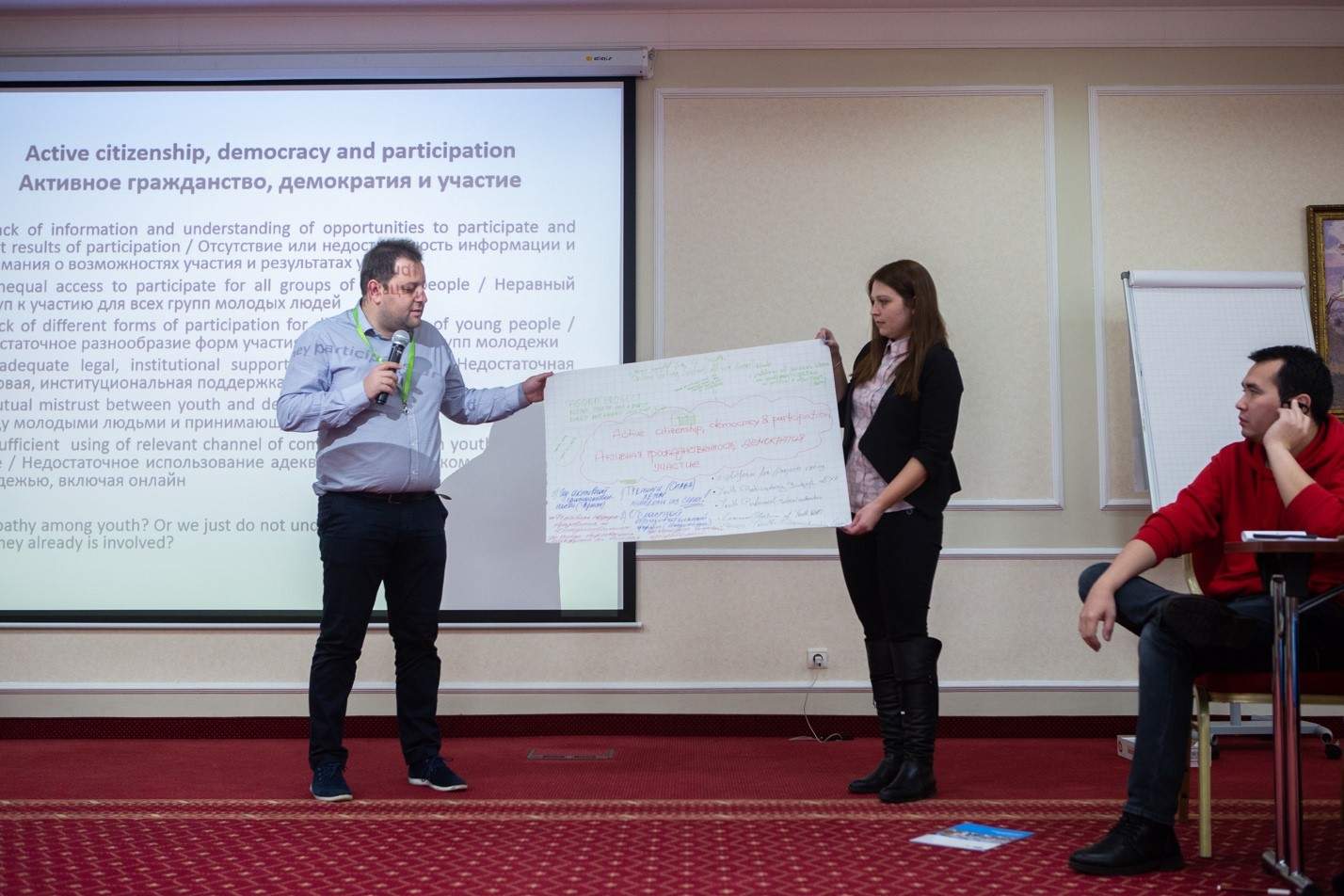
In the Action Plan for 2018 for the Framework Program on Cooperation between the Council of Europe and the Russian Federation in the field of youth policy the event was designated as “Training seminar on youth policy and youth work (as a part of the implementation of the Recommendation of the Committee of Ministers of the Council of Europe on youth work CM/Rec(2017)4)”. The name was corrected (clarified) by mutual agreement of parties at the preparatory meeting of the project during the development of the educational program of the event.
Since 1972 youth policy and youth work have been one of the priority areas of the Council of Europe in the framework of the implementation of its mission in the field of human rights, democracy and the rule of law.
“Agenda 2020” was the Council of Europe’s medium-term strategy document on youth policy. It stated the aim of youth policy was to “provide young people with equal opportunities and practical experience to develop knowledge, skills and competencies to participate fully in all aspects of society”. This equality of opportunity was closely linked to the issue of youth access to rights including the right to participation.
Youth access to rights was an important element in building a culture based on principles such as human rights, democracy and the rule of law. Obstacles to quality education, difficulties in securing stable employment, insufficient capacity of social and health services to meet specific needs of young people, the negative effects of precarious life situations and the lack of opportunities to participate in society were some of key challenges young Europeans had faced then.
The Youth Sector of the Council of Europe is dedicated to developing and promoting standards to address problems faced by young people. It encourages Member States to develop their national youth policy through a set of recommendations and other documents based on values of the organization that could allow to have a minimum level of youth policy standards in Europe.
One of priorities of the “Youth for democracy” program of the Council of Europe for 2018-2019 was to ensure youth access to rights. It included education in the field of human rights and citizenship, access to social rights for young people from disadvantaged areas and the implementation of the Recommendation on Youth Access to rights. The CM/Rec (2016) 7 recommendation was adopted by the Committee of Ministers of the Council of Europe in 2016 and reaffirmed “the fundamental role of youth and the work carried out by youth organizations for the development of our societies”. It emphasized that “youth’s access to rights is essential condition for the personal development of its representatives and access to autonomy”.
The Committee of Ministers recommended to Member States:
- to consider the discriminatory practices faced by young people with particular attention to the multifaceted identity and cross-sectoral nature of discrimination,
- to eliminate everything restricted young people’s access to the right to hold peaceful meetings, freely form associations and trade unions, join them and be active,
- to establish or develop youth policy at all levels in order to more effectively promote the idea of youth universal access to rights,
- to adopt a coordinated approach to strengthening work to ensure youth access to rights through cooperation in all relevant policy areas at the international, national and local levels,
- to develop strategies to strengthen work to ensure youth access to rights reflecting principles of the universality and indivisibility of human rights, non-discrimination and equal opportunities, gender equality, responsibility, democracy, participation and intergenerational solidarity.
This Recommendation also emphasized the importance of monitoring the situation and the prompt response on the part of Member States to violations of rights and ensuring adequate protection through legislative provisions.
The CM/Rec (2016) 7 Recommendation formed a new concept of understanding, developing and evaluating youth policy based on rights of youth in which Member States were main subjects of obligations.
The purpose was to study the role and positive impact of youth policy and youth work on the process of ensuring youth access to rights in the Russian Federation and other signatory states of the European Cultural Convention as well as to promote a common understanding of the implementation of youth policy based on rights of young people in the context of the Council of Europe.
The program of the seminar was focused on mutual intercultural learning based on the practical experience, expertise of participants and on the basis of the CM / Rec (2016) 7 Recommendation of the Committee of Ministers to Member States on youth access to rights.
Seminar objectives:
- to acquaint participants with approaches and features of the implementation of youth policy in the Russian Federation and other signatories of the European Cultural Convention,
- to analyze and disseminate information about values of the Council of Europe and approaches of its youth sector with particular attention to young people’s rights based approach to youth policy, as outlined in the Recommendation on youth access to rights,
- to study existing problems and needs related to youth access to rights,
- to discuss possible actions within the framework of youth policy and instruments of work with youth necessary for the implementation of the Recommendation on youth access to rights,
- to support an open dialogue and promote cooperation between participants including through the joint development of common initiatives between the Russian Federation and other countries.
Participants were 50 people living in the Russian Federation and other signatories of the European Cultural Convention as well as invited guests from international organizations that were actively involved in the youth field.

Cooperation between the Russian Federation and the Council of Europe in the field of youth policy
- LocationMoscow, the Russian Federation
- Event date23.11.2018 - 29.11.2018
-
Event organizers